About My Archaeology Journey
I began working in the Civil Engineering Department at City University in 1983. One of my earliest and most memorable experiences was when Norman Lindsey, then Head of the Photogrammetric Section, asked me to supervise a student who was recording and measuring an archaeological site at St John’s Gate near the University. Although I had previously used close-range photogrammetry in several engineering projects, I found it especially exciting to see the technique applied to the precise measurement of archaeological remains.
My interest grew further when Norman took me to St Albans Cathedral (the Abbey) to help plan the photogrammetric survey of a Norman brick wall that had begun to develop cracks. Seeing how photogrammetry could be used to document and analyse historic structures was both fascinating and inspiring.
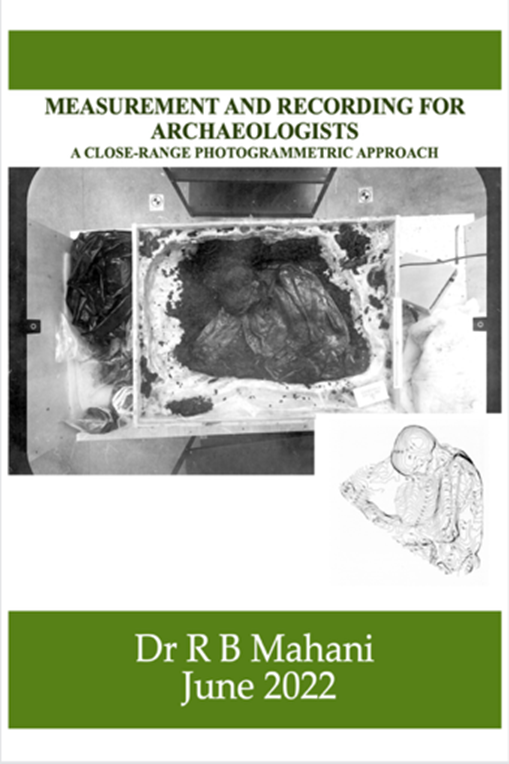
In 1984, I had the privilege of being part of the team that measured Lindow Man, the ancient body discovered preserved in peat in Cheshire. I also contributed to the BBC television programme Q.E.D.: The Body in the Bog, which was broadcast in April 1985.
At the time, there was very little literature on the application of photogrammetry in archaeology. In 1985, I therefore suggested to Norman that we write a book together on measurement for archaeologists. We began compiling notes, but unfortunately, the project never came to fruition because I left the University to work in industry.
Thirty-five years later, in March 2020, during the COVID-19 lockdown, I rediscovered those notes while clearing my study. I initially assumed that advances in technology would have made them obsolete; however, after further research, I realised that a significant gap still existed. This prompted me to complete and update the work. The stereo-TV system developed by Norman Lindsey, a student, and me in 1985 remains a valuable tool for archaeological recording.
This booklet explains how measurements can be derived from both single- and stereo-images and presents a general mathematical model for photogrammetric analysis.