Brunel University Profile

Dr Roohollah
Babaei-Mahani

Honorary Reader - Brunel University of London

Hello, and thank you for visiting!

I am currently an Honorary Reader at Brunel University, with a primary research focus on the environmental impacts of offshore and onshore pollution resulting from oil and gas drilling operations. 

Email: roohollah.babaei-mahani@brunel.ac.uk

university webpage

About Me

My story

A Curious Life

"Learning has never been my profession. It has always been my hobby."

Some people believe there is something unusual about me, and perhaps they are right. Whenever I discover a subject that interests me, I immerse myself in it. I want to understand not only how it works, but also how to simplify it, improve it, or use it to create something of added value. For me, learning has never been an obligation; it has always been one of life's greatest pleasures.

This curiosity has shaped both my academic and professional life. My formal education included a PhD and an MBA, but my learning never stopped there. Over the years, I have completed many additional courses through institutions such as the Open University, University of East Anglia, University of Bath, and others, simply because I wanted to understand more. My academic interests eventually centred on environmental engineering and sustainability, but my career took me through engineering, offshore drilling, safety systems, energy, environmental research, and many other multidisciplinary fields. Each experience broadened my perspective and taught me to look at problems from different angles.

“A curious mind never retires.”

My years working on offshore oil and gas rigs also shaped how I think. Life on a drilling rig requires handling many responsibilities at the same time, making decisions quickly, and constantly adapting to changing situations. That environment suited my personality. While many of my friends prefer to master one subject before moving on to another, I have always enjoyed working on several projects simultaneously. I like to think deeply about each one, even if they belong to completely different disciplines.

Of course, learning is only one part of my life. Like everyone else, I enjoy spending time with friends, sharing meals, laughing, watching films and football, and, with seven grandchildren, more children's programmes than I ever imagined! These moments remind me that life is about people as much as ideas.

One person who has always kept me grounded is my wife. Whenever I enthusiastically tell her about a new subject I have explored or another course I have completed, she smiles and asks one simple question:

“So what?”

It is a wonderfully practical question, and one that has stayed with me over the years. It reminds me that acquiring knowledge is not an end in itself. What matters is what we do with that knowledge, how we apply it, and whether it can make a positive difference to others.

Her simple question made such an impression on me that, when I came to write my memoir, there could hardly have been a more appropriate title:

So What?

I once had a friend who criticised my habit of constantly learning. He suggested I should spend my time on more ordinary hobbies, such as walking or following a daily routine. I replied that I already enjoyed walking, meeting friends, watching television, reading books, and many of the same activities as everyone else. Learning was simply another hobby, one that gave me enormous satisfaction. By the end of our conversation, he laughed and admitted,

"Perhaps you're right. Maybe I should start learning too."

Looking back over the years, I realise that my greatest hobby has never changed. Whether I was measuring structures with photogrammetry, working offshore, studying environmental engineering, writing books, or supervising research, the motivation has always been the same: to understand something deeply, simplify it where possible, and leave it a little better than I found it.

That is also the purpose of this website. It is a place to share experiences gathered over many decades, in the hope that they may inspire students, young engineers, researchers, and anyone who believes that learning should never stop.

"If, after reading these pages, someone is inspired to learn something new today, then this website has achieved its purpose."

"Knowledge only becomes valuable when it is shared."

Email: rbmahani@gmail.com

Academic Research Interests

Research
Thermal Energy
Storage
Recycling and Waste Management
Risk and Safety Engineering
System Dynamics and Modelling

Experience

Working with

Education

Studied at

Industry Expertise

Experience

 In addition to academia, I spent over a decade working in the oil and gas sector, primarily in offshore drilling, with a particular focus on jack-up rigs. My work has involved:

  • Supervision Lead for New-built and refurbishment of a few jack-up rigs
  • Safety and risk analysis
  • Engineering support and system design for offshore structures

I remain deeply interested in any field related to jack-up drilling rigs and offshore operations.

The publications and articles presented here are published directly by Belmore Press, an imprint of Belmore Energy Ltd.

These works are made freely available for reading and download. They may be referenced or quoted for academic, educational and non-commercial purposes, provided that appropriate acknowledgement is given to the original author(s) and Belmore Press.

Unless otherwise stated, copyright remains with the respective author(s). Reproduction or distribution of substantial portions of these works requires prior permission from the copyright holder.

Personal Interest and Books

Hobbies

Research grants and projects

Project details
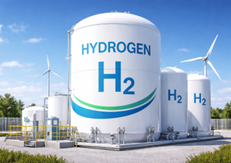
  • Risk Analysis and Management of Hydrogen Handling Facilities


    Hydrogen is expected to play a crucial role as a future energy source. However, its production, transport, and storage involve inherent risks. To effectively manage these risks, it is essential to establish appropriate prevention and protection measures.
    Since hydrogen handling constitutes a complex socio-technical system, traditional risk assessment methods are often inadequate, as they fail to capture the interconnected nature of risks within such systems.
    This research aims to develop a comprehensive and integrated framework that combines artificial intelligence and system dynamics to support risk assessment and management in hydrogen-handling facilities.

  • Thermal Energy

    Thermal energy arises from the motion of atoms and molecules and plays a vital role in industrial heating, energy storage, and climate control.

    Phase Change Materials (PCMs) enable high-density thermal energy storage by absorbing and releasing heat at near-constant temperatures, improving efficiency while reducing peak energy demand and carbon emissions.

    Our advanced PCM technology captures excess heat and releases it when needed, delivering reliable performance across industrial, renewable, and building energy applications.

    Thermal Storage Unit (TSU)
    Developed through years of research by Dr. R. B. Mahani and Dr. P. T. Sardari, the TSU integrates advanced PCMs into a scalable, efficient, and cost-effective thermal energy storage solution.

    For more information, please contact us.

  • Solids Control and Drill-Cuttings Treatment at Source

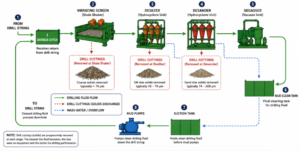
    During drilling operations, drilling fluid returns to the surface carrying rock fragments known as drill cuttings. On a jack-up rig, the solids-control system separates these solids so that the drilling fluid can be conditioned and recirculated. The shale shaker provides the primary separation stage, followed by other equipment. The separated cuttings may retain drilling-fluid components and hydrocarbons, creating operational and environmental challenges for their handling, transport and disposal.

    Our research investigates taking solids control a stage further by cleaning drill cuttings at source, directly on the jack-up rig. The aim is to remove residual hydrocarbons soon after the cuttings leave the solids-control system, reducing the need to transport contaminated material ashore for treatment.

    Treatment at source could reduce offshore waste transportation, recover hydrocarbons, reduce waste-management requirements and improve the environmental performance of drilling operations. Our research therefore treats drill cuttings as an extension of the rig's solids-control system, moving toward a more integrated and sustainable approach to offshore drilling waste management.

  • Corrosion in Ageing Jack-Up Drilling Rigs

    Corrosion represents a significant financial burden to the oil and gas industry, amounting to billions of pounds annually. This study examines the impact of cold-stacking on jack-up drilling rigs, highlighting how prolonged idling accelerates structural deterioration through corrossion. Furthermore, it outlines effective strategies for mitigating and managing the associated risks to ensure asset integrity and operational safety. 

Contact

Let's talk

    Full name *

    Email address *

    Message *

    Dr Roohollah Babaei-Mahani
    • E-mail: rbmahani@gmail.com
    Dr Roohollah Babaei-Mahani