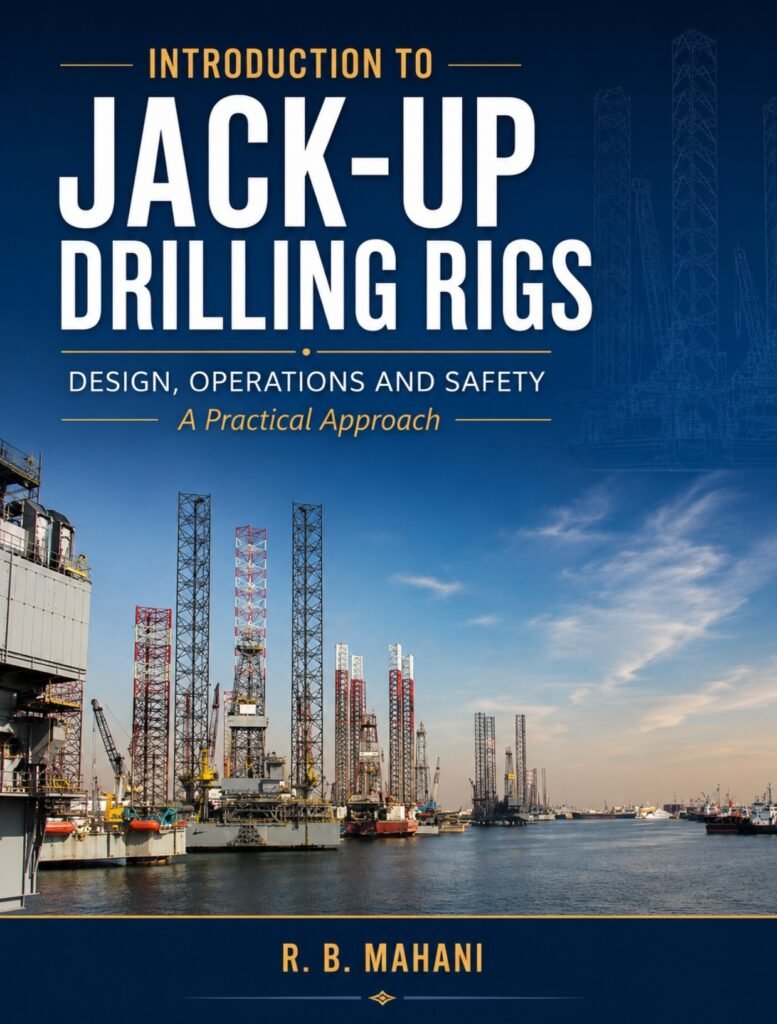
About the book
The primary objective of this book is to provide a comprehensive and accessible textbook on jack-up drilling rigs, addressing a noticeable gap in the existing literature. Although many excellent publications exist on offshore drilling and offshore structures in general, relatively few focus specifically on jack-up drilling rigs in a comprehensive and integrated manner. This book aims to fill that gap by presenting a broad overview of jack-up rigs, including their design, structural components, operational procedures, safety considerations, and the relevant standards and certifications governing their use.
The material presented in this book is based not only on published sources and industry standards, but also on my professional experience in the offshore industry, particularly in the construction of new jack-up drilling rigs and the refurbishment of ageing units. Through this experience, I have gained practical insight into the engineering, operational, and safety aspects of jack-up rigs. This practical perspective has helped shape the content of the book and is intended to complement the theoretical material with real-world understanding.
Jack-up drilling rigs remain one of the most widely used types of mobile offshore drilling units (MODUs) for oil and gas exploration and production in shallow to moderate water depths. Their ability to provide a stable, elevated platform above the sea surface makes them particularly suitable for drilling operations in many offshore regions worldwide. Despite their widespread use, the available literature often treats jack-ups only briefly within broader discussions of offshore structures. This book, therefore, provides a focused examination of jack-up rigs and their role in offshore drilling operations.
The book is intended primarily for undergraduate and postgraduate students studying offshore engineering, marine engineering, petroleum engineering, or related disciplines. It is also designed to serve as a useful reference for engineers, inspectors, offshore personnel, and individuals who are entering or planning to enter the offshore oil and gas industry.
In contrast to highly specialised or narrowly focused publications, this book adopts a broader and more practical approach. It introduces the fundamental components of jack-up rigs, the principles underlying their structural design, and the operational procedures associated with their deployment and drilling activities. It also addresses important topics such as accidents and lessons learned, corrosion management, inspection and maintenance practices, risk and reliability assessment, classification societies, regulatory frameworks, and industry standards.
Throughout the book, emphasis is placed on safety, reliability, and the lessons learned from past offshore incidents. Understanding these aspects is essential for engineers and operators responsible for the safe operation of offshore drilling rigs.
It is hoped that this book will serve as a useful guide for students, engineers, and industry professionals seeking a clearer understanding of jack-up drilling rigs and their role in offshore engineering.