About My LAWN BOWLING Journey
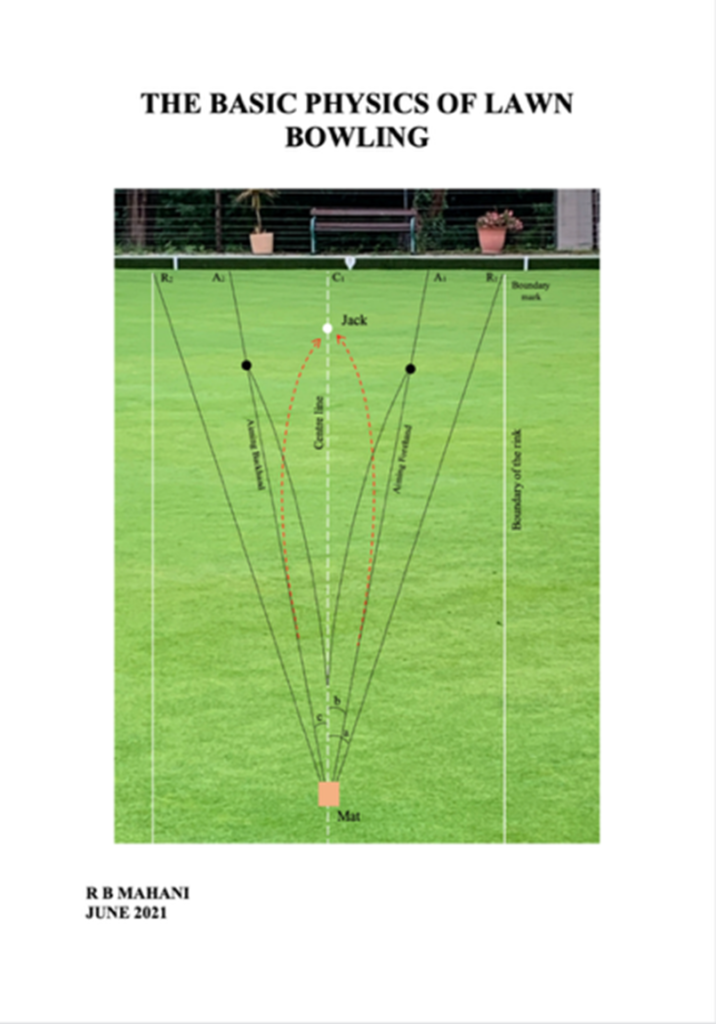
I have always enjoyed watching lawn bowling on television, but one thing consistently puzzled me: although the bowl is delivered at an angle, it does not travel in a straight line; it curves.
In 2021, I began reading about the game and learned why this happens. Lawn bowls are deliberately biased: they are not perfect spheres, and their centres of mass are offset. This asymmetry causes the bowl to follow a curved path as it rolls.
That same year, I joined my local bowling club. As I started playing and delivering the bowl toward the jack, I initially thought the outcome depended mainly on two factors, the force of the roll and the aiming angle. I soon realised that the physics of lawn bowls is far richer and more subtle than that.
With a long-standing interest in mathematics, I began exploring the physics behind lawn bowling in more depth. The results of that exploration are presented in the attached notes.
These notes are primarily a personal reference, though they may also be useful to beginners. In practice, physics alone will not allow a player to deliver the perfect bowl; lawn bowling is a highly skilled game mastered through years of experience. Nevertheless, simple physics principles can help identify a good aiming line, particularly for newcomers. One such approach, Mahani’s method, is described at the end of this booklet.